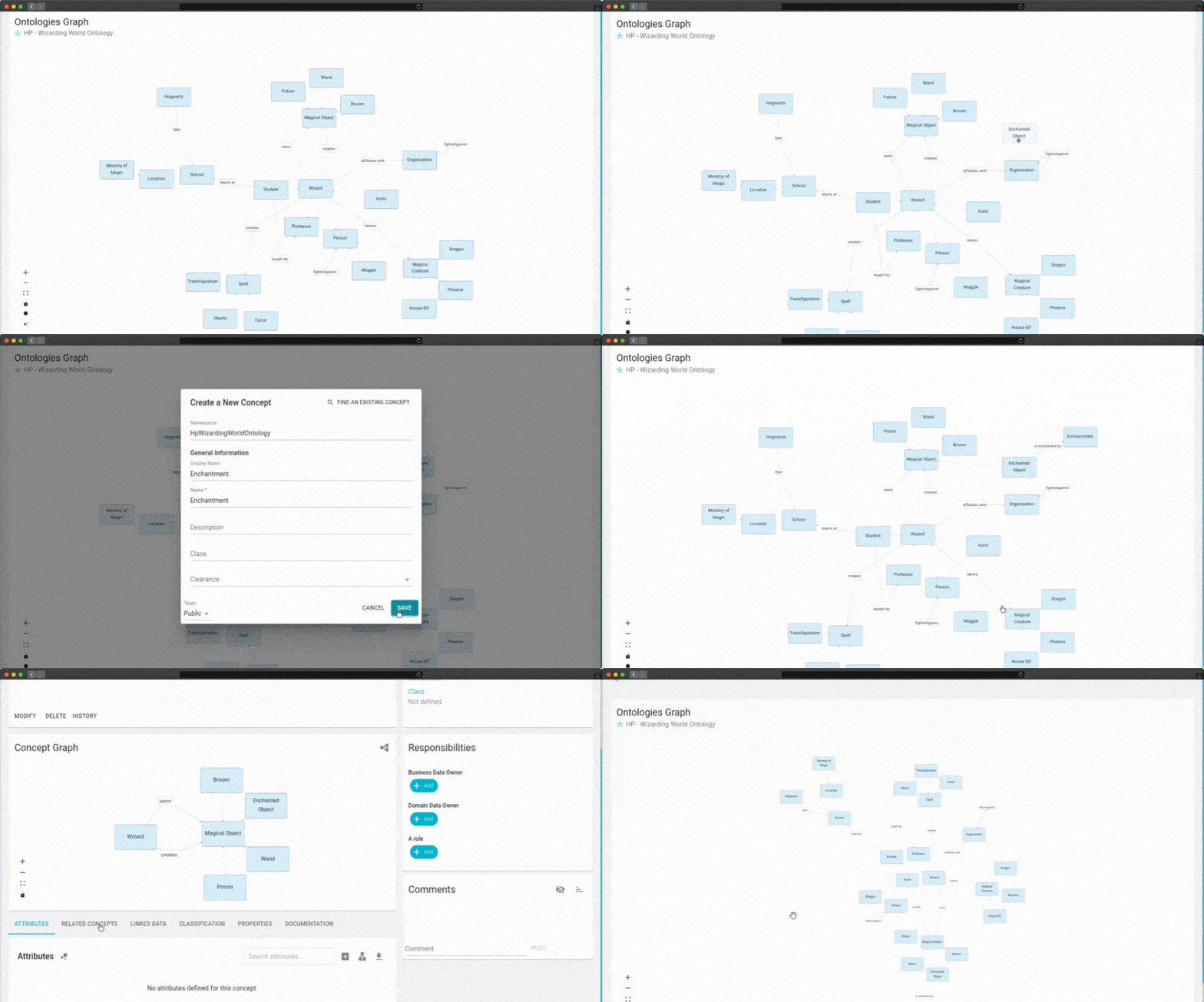
Overview
Blindata’s Business Glossary is your shared ontology: concepts, relationships, and namespaces that answer what this data means. The Blindata AI Assistant and connected agents use that map to reach the right data products and assets, instead of relying on keyword matches alone.
People and agents share the same path from meaning to data. When a person searches for “Customer” or “Order,” or an agent resolves those concepts, Blindata navigates the ontology first, then follows semantic links to certified data products and physical assets—so discovery, definitions, suggested links, and queries against mapped tables and columns stay grounded in stewarded vocabulary, under the same access controls as the rest of the platform.
Features
Build a shared ontology that teams and agents can trust. Domain-driven namespaces keep ownership and scope clear, relationships connect concepts, and semantic links bind them to real catalog assets and data products. Use the Blindata AI Assistant to draft and refine a map of your data that humans and agents can consume.
Domains & namespaces
Ontology is domain-driven: each namespace is a business domain with clear ownership and scope, so Customer in Sales is not confused with Customer in Support.
Relationships
Model how the business actually works with inheritance, composition, and dependencies, so people and agents can walk the graph instead of skimming a flat term list.
Semantic links
Bind glossary attributes to catalog columns and data product ports so every concept points at certified assets, not just a definition.
Stewarded term detail
Aliases, formulas, patterns, naming rules, and taxonomies live on the term, so stewards keep precision where it belongs without bloating the graph.
AI-assisted curation
Draft concepts and structure from docs, diagrams, or catalog assets with the Assistant. Stewards review and save so the ontology stays trusted.
Grounded AI context
Assistants and agents follow the same path from namespace to concept to links to schema, so answers and queries land on meaning your organization already owns.