Overview
Blindata’s Data Products Catalog is where you manage your organization’s data product portfolio: what exists, who owns it, how products depend on each other, and whether they are fit to reuse. Pair it with the integrated Marketplace so consumers can browse certified products and request access, while producers and governance keep an auditable record of who uses what, and why.
Features
Manage the estate as owned products, and turn that portfolio into a governed storefront for discovery and access.
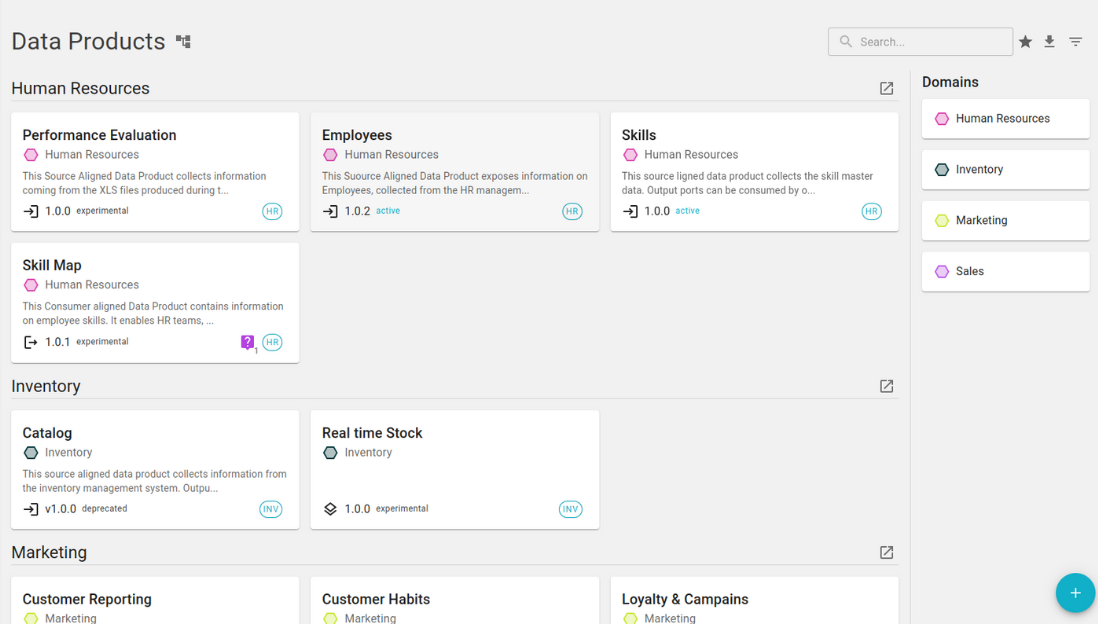
Organize products by domain and assign clear responsibilities across producers and stewards.
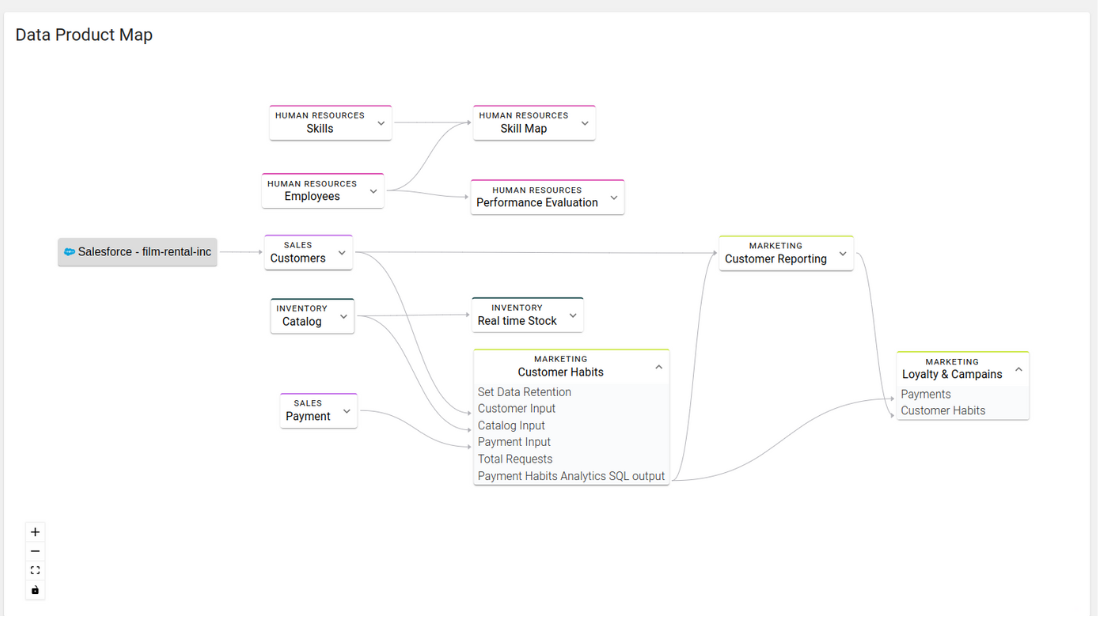
Explore product- and port-level links before you reuse, change, or retire something.
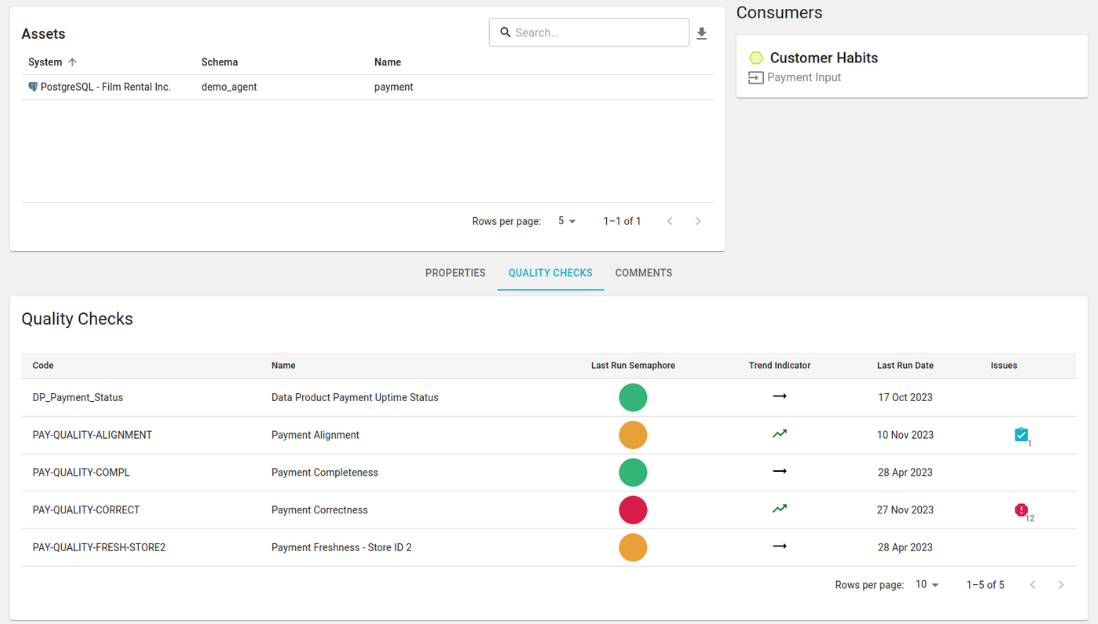
Surface quality, documentation, and policy status where consumers decide what to use.
Browse certified products with context, ownership, and quality so teams find what they need without asking around.
Request access with intended use, approve transparently, and track consumption. See the Marketplace.
Keep the portfolio current as teams deliver, with shift-left data contracts, standards, and lifecycle gates from draft to publication. Explore Data Ops.
How to
Group data products by subject matter or business capability so the portfolio mirrors how your organization works. Clear domain boundaries make discovery faster, clarify who owns what, and give stewards a manageable scope for responsibilities and policies. Blindata provides a dedicated place to manage domains: catalog them, document their purpose, assign owners, and track how domains depend on each other as the estate grows.
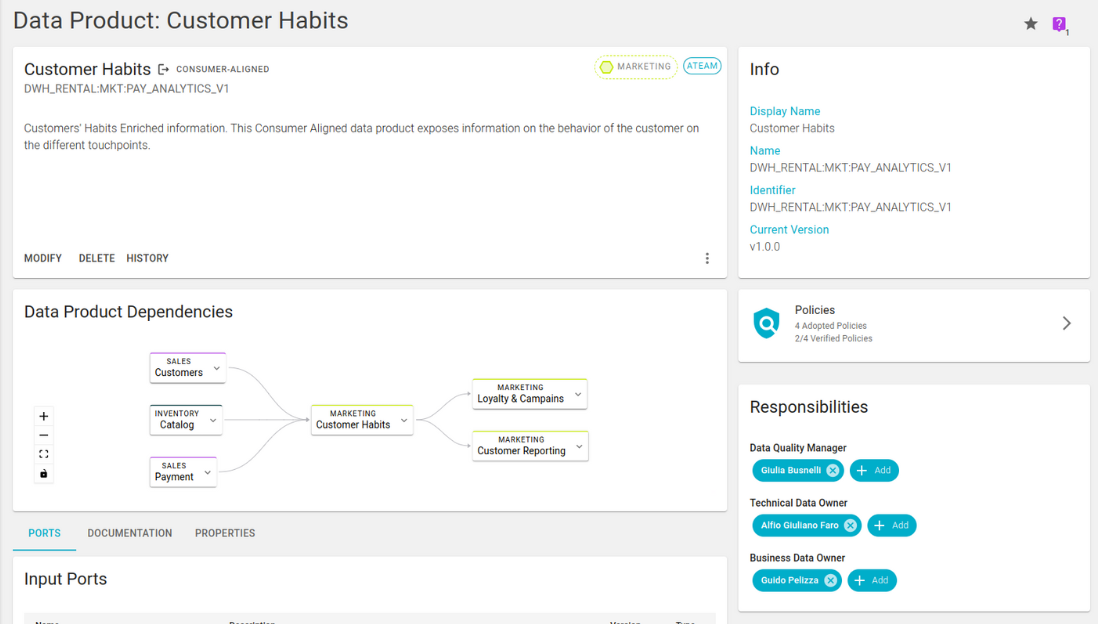
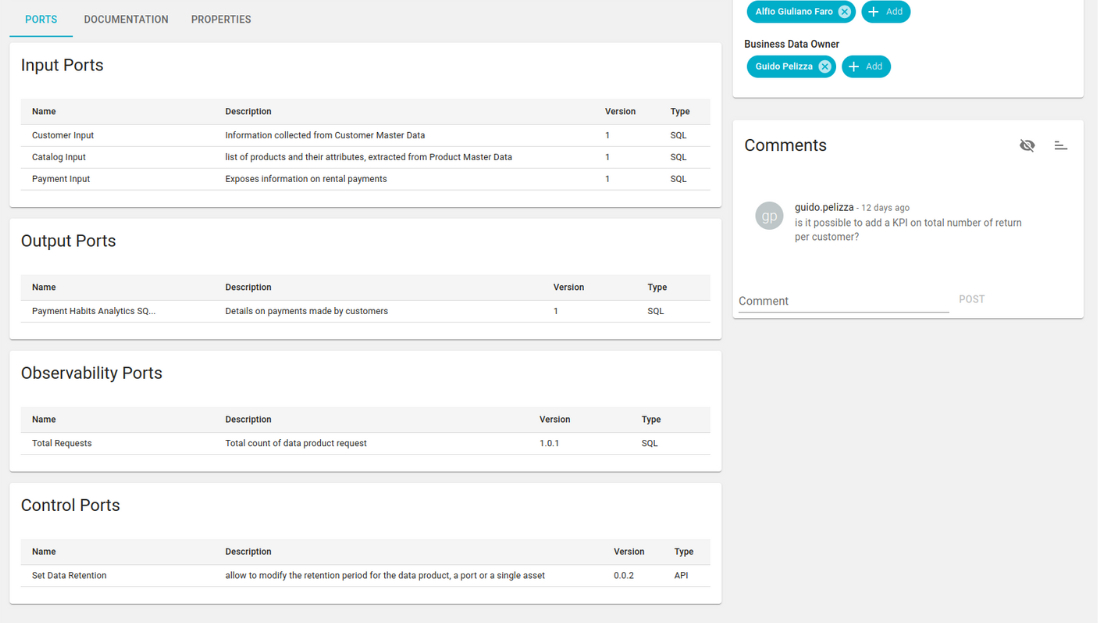
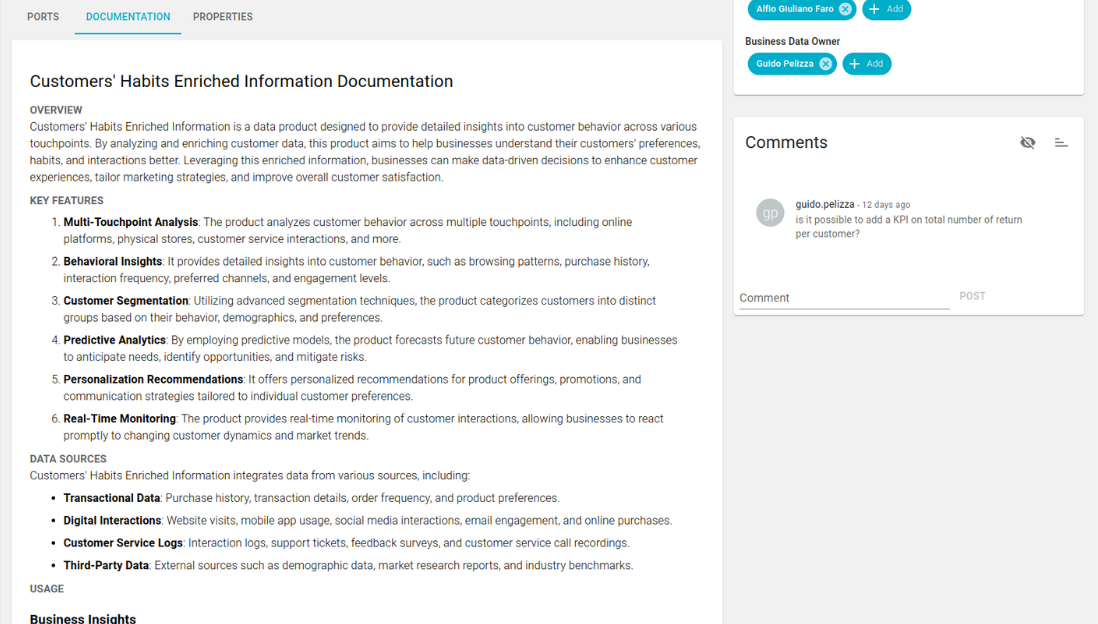
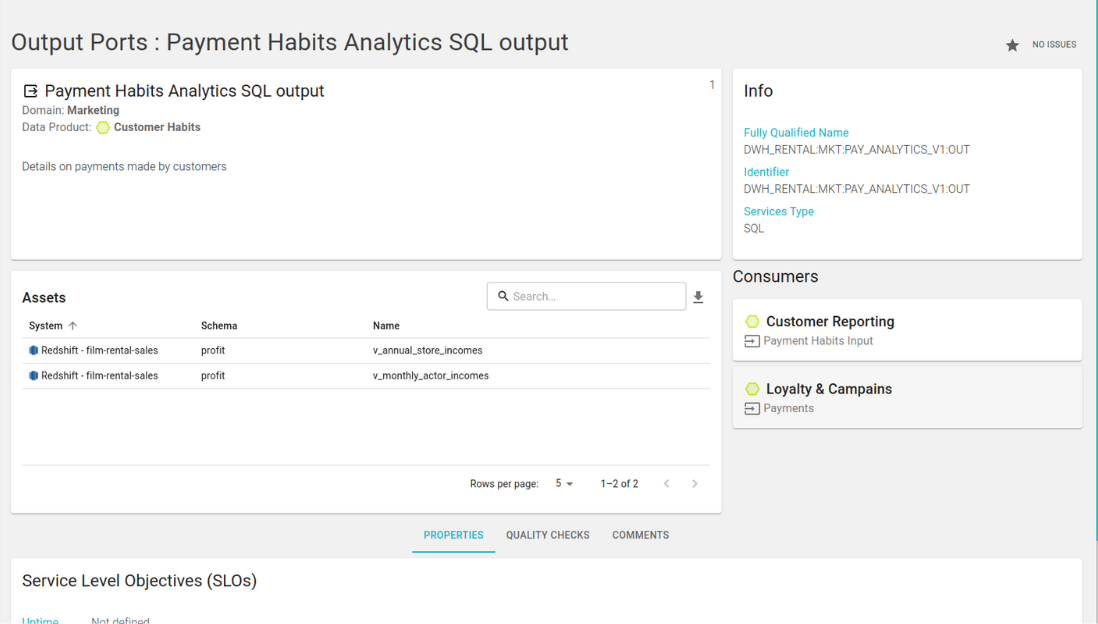
Treat each data product as a managed asset: describe its intent, assign owners, and catalog its input and output ports. Associate the underlying data assets with each port so consumers and producers share a complete picture of what the product exposes and relies on. Enrich products with documentation and extensible metadata so quality expectations, contracts, and usage guidance stay with the product, instead of living in a separate wiki that goes stale.
Before you reuse, change, or retire a product, understand what it touches. The portfolio map shows how data products connect at a high level; drill into port-level dependencies when you need a finer view of impact. For deeper technical lineage (tables, columns, and SQL-derived flows), combine this with Blindata’s Lineage module so governance and engineering decisions rest on the same dependency picture.
Once products are documented and trustworthy, make them discoverable in the Marketplace. Consumers browse certified offerings, assess ownership and quality, and request access with a clear business purpose, not a generic ticket. Owners approve or adjust access with full context, and governance teams keep an auditable record of who uses which products and why.